
Sapreno Taste Lab · October 15, 2026
Understanding Tannin: why an astringent must match the dish
Teaser: Tannin causes a dry mouthfeel by binding to salivary proteins; used appropriately it enhances a dish’s structure, but combined incorrectly it impairs enjoyment.
What are tannins and why are they relevant?
Tannins (from French tanin = astringent) are plant polyphenols, often polymerized flavonoids such as catechins or epicatechin. They occur in grape skins, seeds and stems and are therefore central components of red wine. Unlike many other phenols, tannins are characterized by their ability to react with proteins and thus produce specific oral effects. (Source: Wikipedia, UC Davis).
Mechanism: how tannin interacts with proteins in the mouth
The astringency typical of wine and many tannin-rich foods (e.g. black tea, chocolate, certain nuts) arises when tannin molecules bind to proteins in saliva. These interactions are based on hydrophobic forces and hydrogen bonds, lead to the formation of tannin–protein complexes and can result in precipitation or aggregation of those complexes. The outcome is a reduction in the lubricating properties of saliva and a dry feeling often described as “rough” or “grainy” on the tongue and palate. (Sources: PMC review; UC Davis).
Perception depends not only on tannin concentration but also on molecular size, degree of polymerization and the spatial structure of the formed complexes, as well as on the properties of the salivary proteins involved. Small changes in pH, alcohol content, sugar or the wine matrix can modify the nature and intensity of these interactions. (Source: PMC review).
When tannin enhances a dish
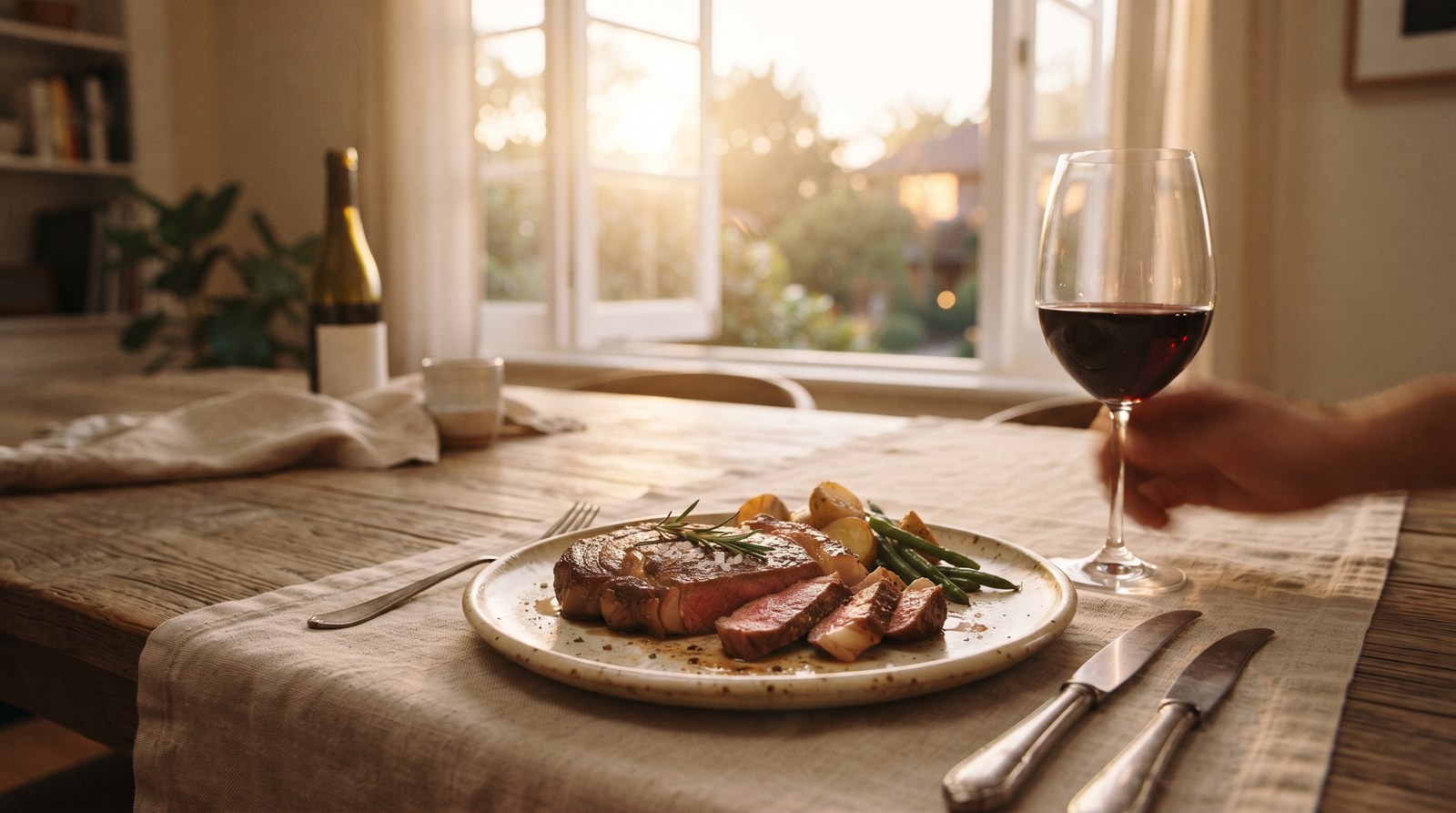
Tannin enhances a dish when its structural presence harmonizes with the texture and fat/protein content of the food. Examples of sensible pairings are concentrated, structurally pronounced red wines with grilled or braised meats that show clear protein and fat structure: the tannins can contrast the juiciness and texture, “clean” the palate and make the structure of the dish more perceptible. In such cases, tannin-induced reduction of salivary lubrication helps aromas to appear clearer and prevents the mouth from being ‘suffocated’ by fat. (Sources: general mechanism of tannin–protein interaction; UC Davis).
Another positive effect occurs when the dish’s texture provides sufficient “counterforce”: creamy sauces with proteins, roasted aromas or mildly bitter components can meet tannins head-on without the astringency being perceived as disruptive.
(Sapreno relation): According to Sapreno pairing logic, the “structure of the dish” is a central criterion: tannin-rich wines should be matched with dishes that have clear, substantial texture and sufficient protein/fat content so that the wine’s structure complements rather than overwhelms the plate.
When tannin is disruptive
Tannins are disruptive when they meet soft, delicate or sensitive textures — for example with tender fish dishes, creamy desserts or foods with slight sweetness and little intrinsic structure. In these combinations astringency can mask finer aromas or create an unpleasantly dry feeling. Likewise, excessively high concentrations of coarse, harsh tannins (young, rough, poorly polymerized) can destroy balance. (Sources: PMC review; UC Davis).
Components such as sugar, acid, alcohol and polysaccharide matrix elements in the wine or the food also modulate perception. Therefore, considering tannin quantity alone is insufficient — it is always about the interaction of the wine matrix and the dish. (Source: PMC review).
Practical notes for pairing (brief)
• Assess the “structure” of the dish: robust, fatty and protein-rich => tannin can fit; delicate, light, sweet or very creamy => prefer softer wines or white wines.
• Pay attention to tannin quality: aged, polymerized tannins usually act softer than raw, young astringents.
• Consider sauces and spices: roasted aromas, umami or bitter notes tolerate tannin better than fine, floral aromas.
Conclusion
Tannins are not enemies of food but structure-providing components whose mode of action can be explained physically by binding to salivary proteins. Whether they enhance or disturb a dish is determined by the texture and composition of the plate and by the type and maturity of the tannins in the wine. When pairing, it is worth foregrounding the structure of the dish and choosing wine and food so that tannin complements the senses rather than dominating them. (Sources: PMC review; Wikipedia; UC Davis).