
Sapreno Taste Lab · October 08, 2026
Game dishes in autumn: structure, seasoning and the appropriate wine choice
Introduction
Game dishes are a classic autumn food area: venison, roe deer and wild boar each bring distinct textures and flavours that must be considered when seasoning, forming sauces and, in particular, choosing wine. The following exposition summarizes practical fundamentals about meat structure, typical game seasonings and common wine styles that support the flavours without overpowering them. Where useful, the Sapreno pairing logic is taken into account: matching the structure of the dish with the structure of the wine.
Structure and behaviour of the different game types
Roe deer meat is generally leaner and finer‑fibred than larger game. That makes saddle of venison and briefly fried roe deer cuts especially tender; they are sensitive to a dominant wine with too much tannin or excessive roast character. Venison (stag) typically brings more core and more intense game notes; longer braises develop darker, reductive aromatics. Wild boar is even heartier, often with a firmer texture and more pronounced seasoning — the dish requires correspondingly substantial companions.
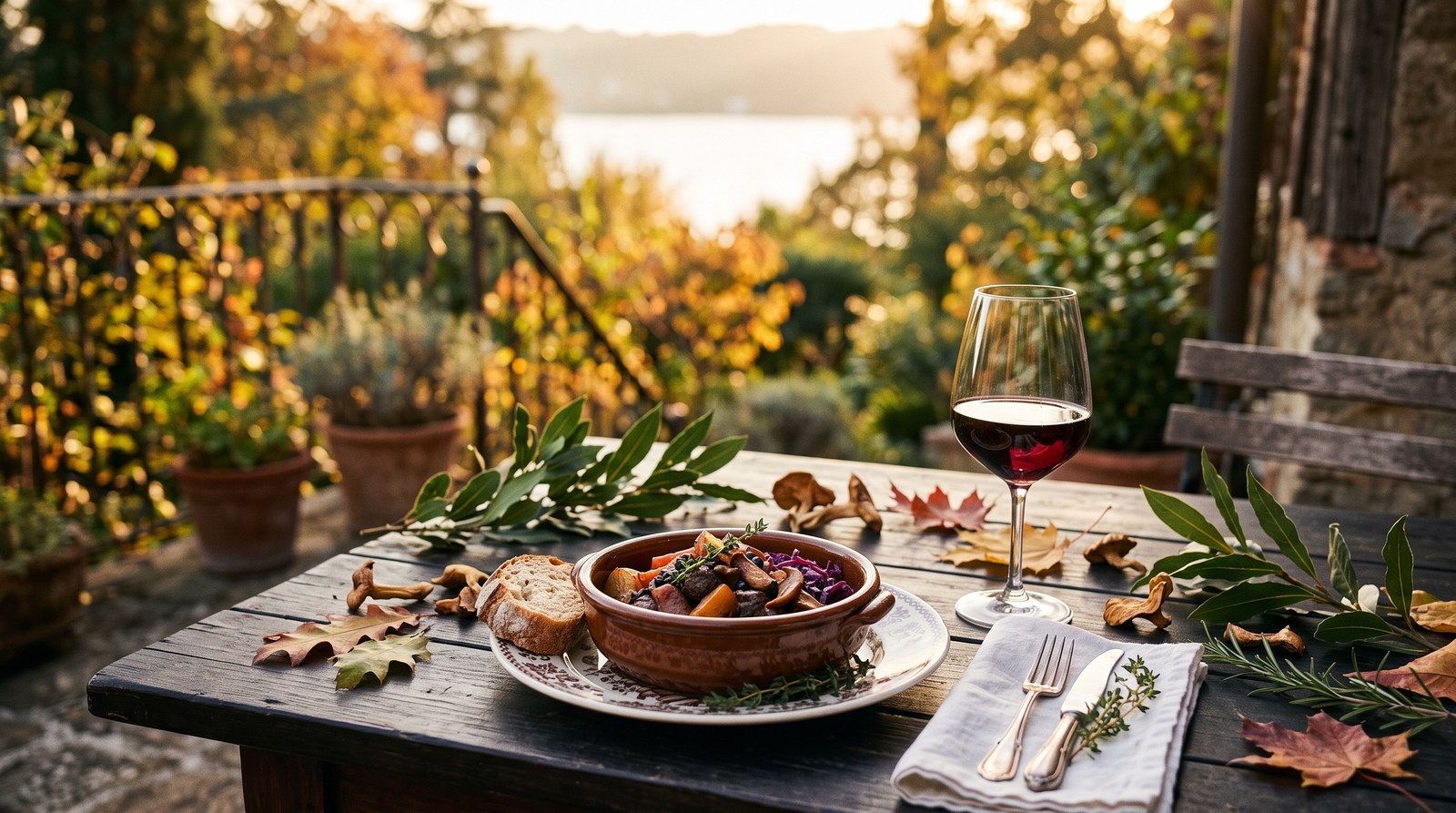
Common kitchen technique for ragouts and braised game pieces often includes a red wine marinade; shoulder, neck and shank pieces are cut up, marinated for several days in red wine with vegetables and spices and then braised. This preparation amplifies the dark, autumnal flavours and changes the wine style needed for pairing. The marinade and braising create a dense sauce base with reductive notes that requires a wine with structure and sufficient fruit so the components do not compete. (Source: game meat overview.)
Seasoning, sauce and their consequences for wine choice
Seasoning patterns and sauces influence the optimal wine choice as much as the meat type. A concentrated, wine‑reduced sauce with dark fruit and roast aromas tolerates and calls for wines with structure: moderate to pronounced tannins, medium to full body and aromas of dark berries, plum, leather or spice. Earthy, mushroomy or hay‑like notes in the sauce can be complemented by fine acidity or slight mineral notes in the wine.
For lightly seasoned, briefly fried pieces (e.g. saddle of venison) an elegant, finely fruited red with less dominant tannins is recommended — Pinot‑type or similar, finely structured Spätburgunder/Pinot Noir styles are classic options. For robust, braised dishes (stag ragout) or rustic wild boar roasts, denser structured red wines with dark fruit, noticeable tannin and some spice are appropriate. In general: the more intense and darker the dish, the "bigger" the wine may be.
Another point is plant components (lingonberries, red cabbage) and side dishes: sweet‑sour accompaniments require wines with lively acidity so balance is maintained. The type of fat addition also matters: creamy, buttery sauces benefit from wines with somewhat higher acidity, while fattier, smoky roasted sides need tannin to cleanse the palate. Also practical: heavily new‑oak‑aged wines can have wood notes that overshadow the delicate game character — restraint with heavy oak usage is advisable.
Sapreno pairing logic: structure before variety
Sapreno considers wine‑dish pairings primarily through structural compatibility: meat texture, sauce density, acidity and spice profile. Practically this means: not only the grape variety decides, but how much tannin, acidity, fruit intensity and alcohol the dish needs for the whole to work. A delicate venison piece requires elegance and fine fruit in the wine; a braised stag dish requires backbone and tannin.
Concretely this means: assess the density of the sauce and the fattiness of the dish and choose a wine with comparable presence. Light dishes with delicate sauces are supported by fine, cooler wines; heavy, dark sauces by warmer, extract‑rich wines. Service notes also belong to the pairing: many structured red wines benefit from decanting, while light Pinot styles are better served cool to emphasize freshness.
Conclusion — action‑oriented rules
• Briefly fried, delicate game (saddle of venison): fine, elegant red wines (Pinot type) with moderate tannins.
• Braised venison (stag): structured, full‑bodied red wines with dark fruit and noticeable tannin.
• Wild boar and rustic preparations: fuller red wines that provide fruit, spice and sufficient tannin.
• Sauces with sweet‑sour elements: choose wines with lively acidity to preserve balance.
Practically: first orient yourself by cooking method and sauce density, then by the game type. Small experiments with local, not overly oaked red wines are often more successful than rigid rules based on variety. Uncertain or speculative advice has been omitted in favour of verifiable statements.
Source note: The practical basics on game preparation and red wine marinades, as well as recommendations for matching structure and wine, can be found in specialist overviews on game cuisine and in information sheets from wine organizations.